Don't overpay for your EV home charger. Many homeowners miss out on $1,000+ in federal tax credits and state rebates for 2026. Learn how to find these savings and pick the best unit before you install.
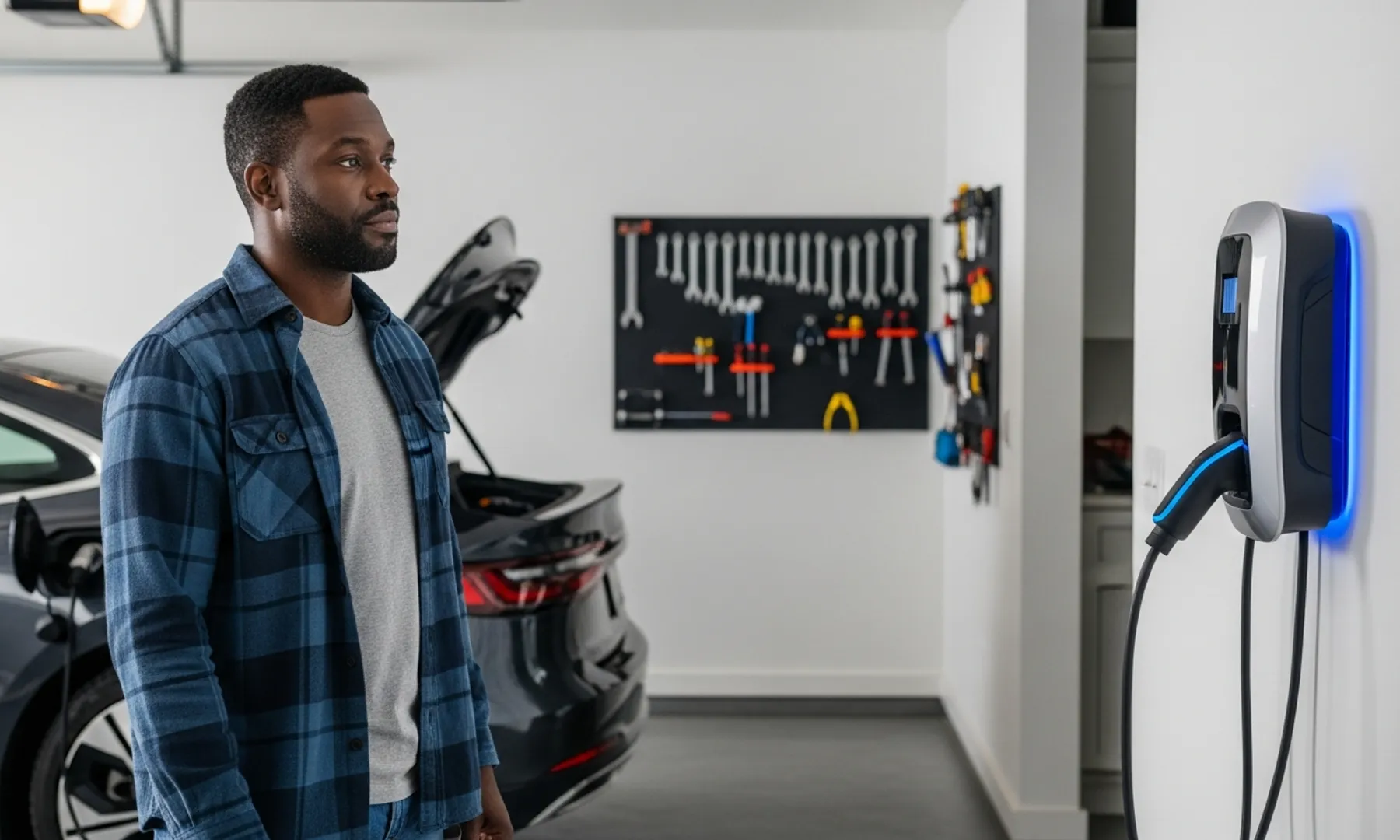
Understanding Your Home EV Charger Costs for 2026
Installing an electric vehicle (EV) home charger in 2026 involves two main costs: the charger unit itself and the professional installation. Many homeowners are surprised by the installation price, which can often exceed the cost of the charger.
On average, expect to pay $400 to $800 for a Level 2 EV charger unit. Installation costs typically range from $800 to $1,500 for a straightforward setup, but can climb to $2,000 to $5,000 or more for complex jobs.
These prices reflect the need for a dedicated 240-volt circuit, similar to what an electric dryer or oven uses. The total cost depends heavily on your home's existing electrical capacity and the charger's location relative to your main electrical panel.
Breaking Down Installation Expenses: What You'll Pay For
When budgeting for your EV home charger, several factors contribute to the final installation price. Understanding these can help you avoid unexpected charges.
- Electrical Panel Capacity: Many older homes have 100-amp electrical panels. A Level 2 charger often requires a 40-amp or 50-amp circuit, which might necessitate an expensive panel upgrade to 200 amps if your current panel is maxed out. This upgrade alone can cost $1,500 to $4,000.
- Wiring Length: The distance between your electrical panel and the desired charger location impacts labor and material costs. Longer runs of heavy-gauge wire mean more expense.
- Permits and Inspections: Most municipalities in the US require electrical permits and inspections for charger installations, ensuring safety and compliance. These typically add $50 to $300 to your bill.
- Location and Complexity: Installing a charger in an attached garage is usually simpler and cheaper than trenching a line across your yard to a detached garage or carport.
- Electrician Rates: Hourly rates for licensed electricians vary by region, from $75 to $150 per hour or more in high-cost areas like New York City or San Francisco.
Unlock Savings: Federal, State, and Utility Rebates for 2026
The biggest opportunity to save money on your EV home charger in 2026 comes from available rebates and tax credits. Many Americans overlook these, leaving hundreds or even thousands of dollars on the table.
1. Federal Tax Credit (IRS Form 8911):
As of 2026, the federal tax credit for "Alternative Fuel Vehicle Refueling Property" is still active. This credit covers 30% of the cost of the charging equipment and installation, up to a maximum of $1,000. This applies to property placed in service through December 31, 2032.
2. State and Local Incentives:
Many states offer additional programs to encourage EV adoption. For example:
- California: Programs through the California Energy Commission (CEC) or local air districts often provide rebates for Level 2 chargers. Check the California Clean Vehicle Rebate Project (CVRP) website or your local utility.
- New York: The New York State Energy Research and Development Authority (NYSERDA) frequently offers rebates for EV charging equipment.
- Colorado: The state provides tax credits or rebates for charging infrastructure.
To find state-specific incentives, visit your state's energy department website or search "EV charger rebates [Your State] 2026."
3. Utility Company Programs:
Your local electric utility company is an excellent resource for rebates. Many offer incentives to install chargers, especially "smart" chargers that can manage charging times.
- Pacific Gas & Electric (PG&E) / Southern California Edison (SCE): Often have programs for residential EV charging stations.
- Con Edison (New York): May offer rebates or off-peak charging incentives.
- Duke Energy (Southeast US): Frequently provides rebates for residential Level 2 chargers.
Check your utility provider's website directly or call their customer service to inquire about current EV charging programs. These programs can often reduce your upfront costs by hundreds of dollars.
Choosing the Best EV Home Charger for Your Needs in 2026
With various Level 2 chargers on the market, selecting the right one for your home in 2026 depends on your budget, desired features, and vehicle. Most modern Level 2 chargers offer similar charging speeds, but "smart" features can make a big difference.
Look for chargers with Wi-Fi connectivity, app control, and the ability to schedule charging during off-peak utility hours. This can save you money on your electricity bill. Also, consider the cord length and whether the unit is hardwired or uses a NEMA 14-50 plug.
Here's a comparison of some top-rated Level 2 home EV chargers popular in 2026:
Top Home EV Charger Units: 2026 Comparison
| Feature | ChargePoint Home Flex | Enel X Way JuiceBox 48 | Wallbox Pulsar Plus | Tesla Wall Connector (Gen 3) |
|---|---|---|---|---|
| Max Output (kW) | 12 kW (50A) | 11.5 kW (48A) | 11.5 kW (48A) | 11.5 kW (48A) |
| Adjustable Amperage | Yes (16-50A) | Yes (16-48A) | Yes (6-48A) | Yes (12-48A) |
| Connectivity | Wi-Fi, Bluetooth | Wi-Fi | Wi-Fi, Bluetooth | Wi-Fi |
| Smart Features | App control, scheduling, energy tracking, voice assistant integration | App control, scheduling, energy tracking, demand response | App control, scheduling, power sharing, energy management | App control, scheduling, power sharing, Tesla integration |
| Cord Length | 23 feet | 25 feet | 25 feet | 24 feet |
| Plug/Hardwired | NEMA 14-50 or Hardwired | NEMA 14-50 or Hardwired | NEMA 14-50 or Hardwired | Hardwired (J1772 adapter sold separately for non-Teslas) |
| Typical Price (USD) | $699 - $799 | $599 - $699 | $649 - $749 | $475 - $525 |
| Warranty | 3 years | 3 years | 3 years | 4 years (Tesla vehicle owners), 2 years (non-Tesla) |
Each of these chargers offers robust features for home use. The ChargePoint Home Flex is known for its user-friendly app and broad smart home integration. The Enel X Way JuiceBox 48 is a consistent performer with excellent energy management tools.
The Wallbox Pulsar Plus stands out for its compact design and power-sharing capabilities, ideal for homes with multiple EVs. While the Tesla Wall Connector is primarily designed for Tesla vehicles, its competitive price and reliability make it a consideration for non-Tesla owners with a J1772 adapter.
The Installation Process: What to Expect from Your Electrician
Once you've chosen your EV charger, the next step is professional installation. This isn't a DIY project due to the high voltage involved and the need for permits.
- Get Multiple Quotes: Contact at least three licensed electricians specializing in EV charger installations. Ask for detailed, itemized quotes that include labor, materials, and permit fees.
- Home Assessment: The electrician will visit your home to assess your electrical panel, existing wiring, and the proposed charger location. They'll determine if a panel upgrade is needed.
- Permit Application: Your chosen electrician should handle the permit application process with your local building department. This ensures the installation meets all safety codes.
- Installation Day: On installation day, the electrician will run the new 240-volt circuit from your electrical panel to the charger location, mount the charging unit, and connect it. This typically takes 4-8 hours for a standard installation.
- Inspection: After installation, a municipal inspector will review the work to ensure it complies with local electrical codes. Once approved, you're ready to charge.
Maximizing Your EV Charging Experience in 2026
Beyond installation, there are ways to optimize your EV charging experience and potentially save more money in 2026. Many utility companies offer special Time-of-Use (TOU) rates for EV owners.
These plans charge less for electricity during off-peak hours, usually overnight. Using your smart charger's scheduling feature to charge during these times can significantly reduce your monthly electricity bill. Some utilities even offer separate meters for EV charging to track consumption more accurately.
Also, consider your future needs. If you plan to get a second EV, a charger with power-sharing capabilities, like the Wallbox Pulsar Plus or Tesla Wall Connector, might be a smart investment. This allows two chargers to share a single circuit without overloading your electrical panel. Compare utility rates and charger features to find your best setup.
Disclaimer
The information provided in this article is for general informational purposes only and should not be considered professional advice. While we strive to keep the content accurate and up to date, we make no guarantees of completeness or reliability. Readers should do their own research and consult a qualified professional before making any financial, medical, or purchasing decisions.