Best Household Supplies to Buy in Bulk (2026): A Smart Shopper Guide
Many Americans think bulk buying saves money, but a common mistake could cost you up to $1,000 a year. Discover the surprising items you should *never* buy big and the smart strategies to cut your household spending by 25% in 2026.
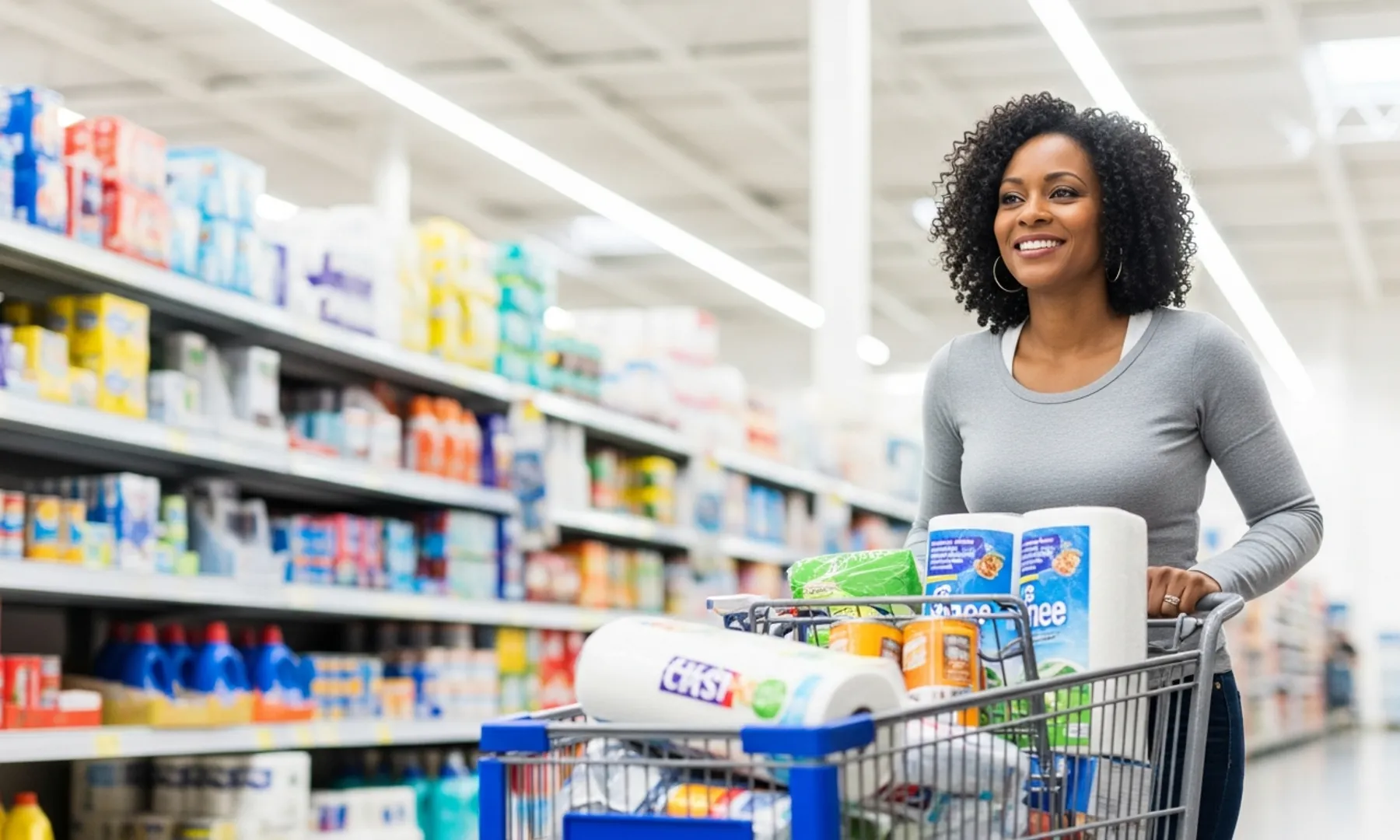
The Bulk Buying Myth: Are You Really Saving Money?
Many Americans believe buying household supplies in bulk automatically saves money. But the truth is, without a smart strategy, you could actually be wasting hundreds of dollars each year.
This guide will cut through the noise, showing you exactly which items offer genuine savings in 2026 and how to avoid common pitfalls. We'll cover everything from smart calculations to storage tips for your home in cities like Dallas or Phoenix.
The Golden Rule: Mastering Unit Pricing for Real Savings
The single most important concept for smart bulk buying is unit pricing. This tells you the cost per ounce, per sheet, or per serving, allowing a true apples-to-apples comparison between different package sizes and brands.
Imagine you're at Costco, looking at a giant bottle of laundry detergent. Don't just look at the total price. Instead, find the unit price, often displayed on the shelf label, like '$0.12/ounce'. Compare this to the '$0.15/ounce' for a smaller bottle at your local Target.
This simple calculation reveals whether the bulk item is genuinely cheaper. Many shoppers skip this step, assuming bigger packages are always a better deal, which isn't always true.
Top Household Categories Worth Bulk Buying in 2026
Certain household items are consistently excellent candidates for bulk purchasing. They are non-perishable, frequently used, and often come with significant unit price savings.
Think about items your family uses daily or weekly, like paper products and cleaning supplies. These goods have a long shelf life and don't degrade quickly, making them ideal for stocking up.
Here’s a breakdown of the best categories to consider for your next bulk shopping trip, potentially cutting your annual spending by hundreds of dollars.
Household Essentials to Stock Up On: 2026 Edition
| Item Category | Why Buy in Bulk? | Average Unit Savings Potential |
|---|---|---|
| Paper Products | Long shelf life, high usage (toilet paper, paper towels, tissues) | 20-40% |
| Laundry Detergent | Concentrated formulas last, used frequently | 15-30% |
| Dish Soap | High usage, slow to expire | 10-25% |
| Trash Bags | Essential, don't expire, often on sale in bulk | 25-50% |
| Batteries | Non-perishable, essential for electronics | 30-60% |
| Non-Perishable Pantry | Pasta, rice, canned goods, dried beans, flour (long shelf life) | 15-35% |
| Personal Care | Toothpaste, bar soap, shampoo (check expiration dates) | 10-20% |
| Cleaning Wipes | High utility, good for quick clean-ups | 20-40% |
These items are staples in most American homes, from New York City to Los Angeles. Buying them in larger quantities can significantly reduce your overall household budget.
Always double-check the unit price, even for these reliable bulk buys, as promotions can change weekly.
When Bulk Buying Becomes a Costly Mistake
Not everything is a good deal in bulk. Some items can lead to waste, spoilage, or simply take up too much valuable space in your home. This is where many smart shoppers go wrong.
Perishable goods like fresh produce, dairy, and certain baked goods often spoil before you can use them all. Even if the unit price is low, throwing half of it away means you're losing money, not saving it.
Also, be wary of items that degrade over time or have short expiration dates, even if they aren't strictly 'perishable'. Think about certain types of coffee, spices, or even some lotions which can lose potency or go rancid.
Items to Avoid Buying in Super-Sized Quantities
- Fresh Produce: Unless you have a large family or plan to freeze/preserve immediately, large quantities often spoil.
- Dairy Products: Milk, yogurt, and cheese have limited shelf lives. Only buy what you'll consume within a week or two.
- Baking Ingredients (certain): Flour can attract pests, and baking powder/soda lose potency over time. Buy amounts you'll use within 6-12 months.
- Sunscreens & Lotions: These can expire or separate, becoming less effective. Check the PAO (Period After Opening) symbol.
- Diapers (for infants): Babies grow quickly. A bulk pack might be too small by the time you use half of it, leaving you with unusable stock.
Finding the Best Bulk Deals: Retailers and Online Strategies
Your local Costco or Sam's Club might be the first place you think of for bulk buying, but they aren't your only options. Smart shoppers in 2026 use a mix of brick-and-mortar and online strategies.
Warehouse clubs like Costco ($60-$120/year membership) and Sam's Club ($50-$110/year) offer significant discounts on large quantities. They are great for paper goods, cleaning supplies, and some pantry staples.
Online, Amazon's Subscribe & Save program can offer 5-15% discounts on recurring orders of household items, often without a membership fee. Many retailers, including Walmart and Target, also offer bulk-size options and discounts through their apps or loyalty programs like Target Circle.
Look for store-brand bulk options, too. Many store brands, like Kirkland Signature at Costco, offer comparable quality at a lower price point than national brands.
Smart Storage Solutions for Your Bulk Buys in a US Home
Buying in bulk is only smart if you can store the items effectively. A basement, garage, or even under-bed storage can become your personal mini-warehouse.
Invest in clear, airtight containers for dry goods like rice, pasta, and flour. This protects them from pests and keeps them fresh longer. Label everything with the purchase date to ensure you use older items first – a 'First-In, First-Out' (FIFO) system.
Consider sturdy shelving units for your pantry or garage. Heavy items like laundry detergent or cases of canned goods need strong support. Keep cleaning chemicals separate and out of reach of children and pets, following all safety guidelines.
Calculating Your Real Savings: A 2026 Budget Check
To truly know if bulk buying benefits your budget, run the numbers. Let's say you save $0.05 per roll on toilet paper by buying a 30-pack instead of a 6-pack. If your family uses 60 rolls a year, that's $3 in savings on just toilet paper.
Now, extend this to laundry detergent, paper towels, and other bulk items. If you save $100 on detergent, $75 on paper towels, and $50 on trash bags annually, your total savings could be $225.
If you paid a $60 membership fee for a warehouse club, your net savings would still be $165. This calculation helps you justify the initial outlay and see the real impact on your household budget. Don't forget to factor in gas money for trips to the bulk store.
Your Smart Shopper Checklist for Bulk Buying in 2026
Ready to master bulk buying and truly save money? Follow this checklist for every shopping trip:
- Always Check Unit Prices: This is non-negotiable for comparing true value.
- Assess Consumption Rates: Only buy what your household can realistically use before it expires or degrades.
- Evaluate Storage Space: Ensure you have adequate, safe, and organized space for bulk items.
- Consider Membership Fees: Factor these into your annual savings calculation for warehouse clubs.
- Look for Sales & Coupons: Stack deals on top of bulk pricing for maximum savings.
- Avoid Perishables: Be extremely cautious with fresh foods unless you have an immediate plan for consumption or preservation.
By following these strategies, you can confidently navigate the world of bulk buying in 2026. Start comparing prices today and see how much you can keep in your wallet.