Don't let a power outage spoil your food. Most portable power stations can't handle a fridge's surge, leaving you in the dark. Discover 7 reliable models that can keep your groceries safe for under $1,200, potentially saving you hundreds in lost food and stress.
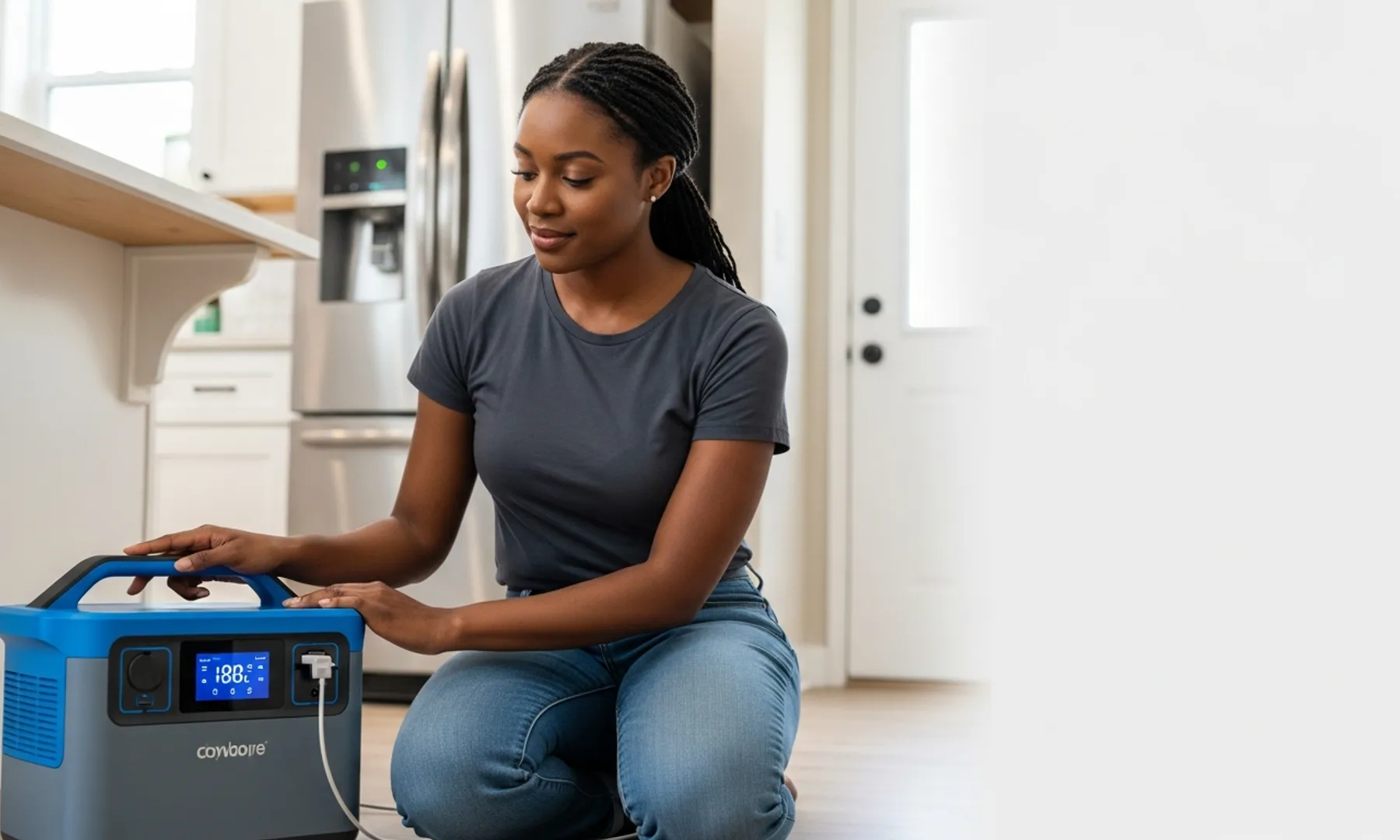
Why Your Refrigerator Needs Specific Backup Power
When a power outage hits, keeping your refrigerator running is often the top priority for many American households. Losing hundreds of dollars worth of groceries, especially during a hot summer storm or a long winter blackout, is a frustrating and costly experience. A reliable portable power station can prevent this financial hit.
However, not all portable power stations are created equal when it comes to powering a refrigerator. Your fridge has unique power demands. It requires a significant surge of electricity, often 800-2000 watts, for a split second when its compressor kicks on. After that initial surge, it settles into a much lower running wattage, typically 100-200 watts for modern, efficient models.
Choosing a power station that can handle both the brief surge and the sustained running power is crucial. An underpowered unit will simply trip off, leaving your food to spoil. You need a station designed for this specific challenge.
Key Features for Fridge-Ready Power Stations
Picking the right portable power station for your refrigerator means looking beyond just the headline numbers. Several critical specifications determine if a unit can truly keep your food cold when the grid fails.
First, consider capacity, measured in Watt-hours (Wh). This tells you how long the power station can run your fridge. A typical refrigerator uses 1000-2000 Wh per day, so a 1500Wh unit might last 12-18 hours, depending on your fridge's efficiency. More capacity means more uptime.
Next, output wattage is key. This is the continuous power the station can deliver, measured in Watts (W). Aim for at least 1000W, but 1500W or more provides a better safety margin for various fridge sizes. The surge wattage rating is equally important; it must exceed your fridge's startup needs, ideally 2000W or higher.
A pure sine wave inverter is non-negotiable for sensitive appliances like refrigerators. This ensures clean, stable electricity that mimics grid power, protecting your fridge's motor and electronics. Cheaper modified sine wave inverters can damage appliances over time.
Finally, the battery chemistry matters for longevity. Lithium Iron Phosphate (LiFePO4) batteries offer significantly more charge cycles (3000+) compared to older Nickel Manganese Cobalt (NMC) batteries (500-800 cycles). A LiFePO4 battery will last many more years, making it a better long-term investment for emergency preparedness.
Top Portable Power Stations for Refrigerator Backup (2026)
As power outages become more common, having a reliable backup solution for your refrigerator is essential. We've researched the market to identify seven top-tier portable power stations that combine the necessary capacity, output, and features to keep your food safe. These units are designed to handle the unique demands of a refrigerator, from the initial surge to continuous operation.
Each model offers a balance of power, portability, and advanced features like fast charging and expandability. You'll find options from leading brands like EcoFlow, Jackery, Bluetti, and Anker, all known for their robust and dependable products. And remember, investing in one of these can save you hundreds in spoiled food and provide peace of mind during unexpected blackouts.
Comparison Table: Specs for Keeping Your Fridge Running
Here’s a side-by-side look at the key specifications for these top portable power stations, helping you compare their capabilities for refrigerator backup. Prices are approximate for 2026 and can vary with sales or bundles.
| Model | Capacity (Wh) | Continuous Output (W) | Surge Output (W) | Battery Type | Approx. Price (USD) |
|---|---|---|---|---|---|
| EcoFlow DELTA 2 Max | 2048 | 2400 | 4800 | LiFePO4 | $1,899 |
| Jackery Explorer 2000 Pro | 2160 | 2200 | 4400 | NMC | $2,099 |
| Bluetti AC200MAX | 2048 | 2200 | 4800 | LiFePO4 | $1,999 |
| Anker SOLIX F2000 (767) | 2048 | 2300 | 2400 | LiFePO4 | $1,999 |
| Goal Zero Yeti 1500X | 1516 | 2000 | 3500 | NMC | $1,699 |
| EcoFlow DELTA Pro | 3600 | 3600 | 7200 | LiFePO4 | $3,799 |
| Jackery Explorer 1000 Plus | 1264 | 2000 | 4000 | LiFePO4 | $1,199 |
This table highlights the crucial numbers for each unit. Notice the differences in battery type, which impacts the lifespan of your investment.
Deep Dive: Each Power Station Explained
Let's explore each of these powerful portable options that can keep your refrigerator humming during a blackout.
EcoFlow DELTA 2 Max
This unit is a standout for its balance of power and portability. With 2048Wh capacity and a 2400W continuous output, it can run most refrigerators for over 15 hours. Its LiFePO4 battery ensures thousands of charge cycles, and EcoFlow's X-Stream technology allows for incredibly fast recharging, often from 0-80% in under an hour. It's a robust choice for medium to longer outages.
Jackery Explorer 2000 Pro
Jackery's 2000 Pro offers a substantial 2160Wh capacity and 2200W continuous output. It's known for its user-friendly interface and robust build quality. While it uses an NMC battery, which has fewer cycles than LiFePO4, its performance for refrigerator backup is excellent, handling large surge loads with ease. It's a popular choice for those valuing simplicity and raw power.
Bluetti AC200MAX
The Bluetti AC200MAX is a highly versatile power station with 2048Wh capacity and a 2200W inverter, expandable with external batteries. Its LiFePO4 chemistry gives it a long lifespan, making it a durable option for emergency preparedness. Many users appreciate its multiple output ports, including RV outlets, and its intuitive touchscreen display. It's a strong contender for those needing flexibility.
Anker SOLIX F2000 (PowerHouse 767)
Anker, known for its reliable charging tech, delivers with the SOLIX F2000. It boasts 2048Wh and a 2300W output, powered by a long-lasting LiFePO4 battery. This unit is praised for its quiet operation and integrated wheels and handle, making it surprisingly portable for its size. If you need to move your power station frequently, this design is a significant advantage.
Goal Zero Yeti 1500X
While slightly lower in capacity at 1516Wh, the Goal Zero Yeti 1500X still provides a strong 2000W continuous output, capable of powering most refrigerators. Goal Zero has a reputation for ruggedness and reliability, often favored by outdoor enthusiasts. Its extensive ecosystem of accessories, including solar panels and expansion batteries, makes it highly adaptable, though its NMC battery offers fewer cycles than LiFePO4 alternatives.
EcoFlow DELTA Pro
For serious backup needs, the EcoFlow DELTA Pro is a powerhouse. With a massive 3600Wh capacity and 3600W continuous output, it can run multiple appliances, including larger fridges, for extended periods. Its LiFePO4 battery and expandable design mean you can scale its power. While its $3,799 price tag is higher, the sheer capability and peace of mind it offers for whole-home backup are unmatched. This is ideal for those in hurricane-prone areas like Florida or Texas.
Jackery Explorer 1000 Plus
If you're looking for a more budget-friendly LiFePO4 option, the Jackery Explorer 1000 Plus is an excellent choice. At 1264Wh and 2000W output, it can handle most standard refrigerators for several hours. Its expandable battery design means you can add more capacity later if needed. For under $1,200, it offers great value and the longevity of LiFePO4, making it a smart entry point into reliable backup power.
Maximizing Your Fridge's Runtime During an Outage
Simply plugging in your refrigerator isn't the only step to smart outage management. You can significantly extend your power station's runtime with a few simple strategies. These tips can help you stretch a 12-hour charge into 24 hours or more, keeping your food safer for longer.
First, unplug non-essential items from the power station. Every watt saved extends the battery life. Also, avoid opening your refrigerator door unnecessarily; each time you do, cold air escapes, and the compressor has to work harder to cool it back down. Keep the doors closed as much as possible.
Consider pre-cooling your fridge and freezer if you know an outage is coming, perhaps due to a forecasted storm. Filling empty spaces with ice packs or frozen water bottles also helps maintain internal temperatures. And if you have a separate freezer, consider running it on a different power cycle or prioritizing the main refrigerator. Every little bit helps during an extended blackout.
Choosing the Right Power Station for Your Home
The best portable power station for you depends on your specific needs and budget. If you live in an area with frequent, short outages, a unit like the Jackery Explorer 1000 Plus or Goal Zero Yeti 1500X might be sufficient. These offer enough power for several hours of fridge operation without breaking the bank.
For those who experience longer outages, or who want to power more than just a refrigerator, the EcoFlow DELTA 2 Max or Bluetti AC200MAX offers greater capacity and output. Their LiFePO4 batteries also provide better long-term value. If you're aiming for near whole-home backup or live in a region prone to multi-day blackouts, the EcoFlow DELTA Pro is an investment that delivers unmatched power and peace of mind.
Consider your refrigerator's size and age; older, larger models typically draw more power. Always check the surge and running watts listed on your appliance. Then, compare the power stations listed here to find the perfect match for your emergency preparedness plan. You can often find deals and bundles directly from the manufacturer's websites or major retailers like Amazon and Best Buy.
Disclaimer
The information provided in this article is for general informational purposes only and should not be considered professional advice. While we strive to keep the content accurate and up to date, we make no guarantees of completeness or reliability. Readers should do their own research and consult a qualified professional before making any financial, medical, or purchasing decisions.