Many spend thousands on home theater gear but miss a crucial $150 detail that makes it all sound flat. Don't let your new setup fall silent. Discover hidden costs and vital acoustic fixes before you buy.
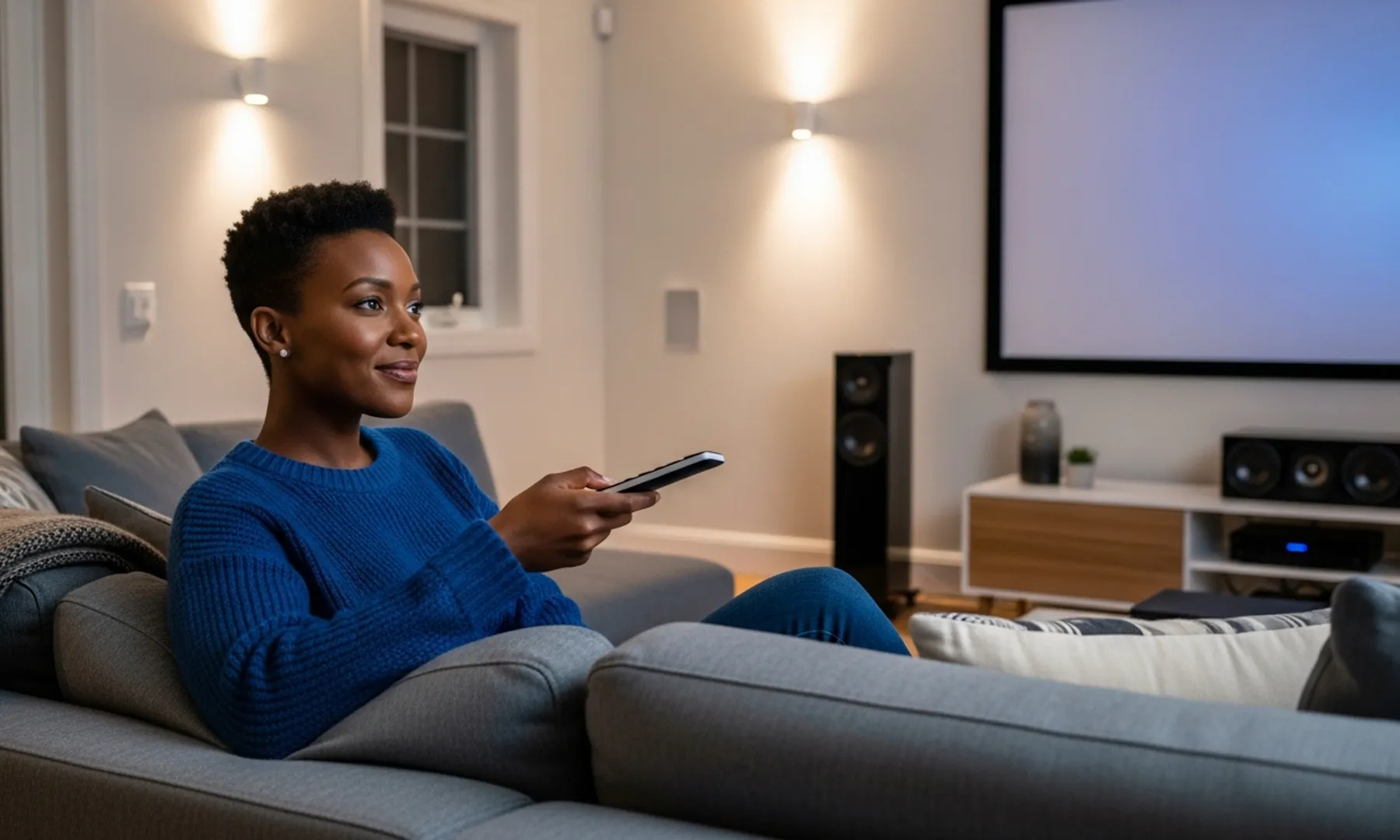
Building Your Home Theater: What Really Matters (and What It Costs)
Dreaming of a cinematic experience right in your living room? A true home theater system delivers immersive sound and stunning visuals far beyond a soundbar and TV. But it's more than just buying big speakers; it's about balancing component costs, intricate wiring, and crucial acoustic considerations. Many Americans spend thousands on gear but miss one crucial $150 detail that makes it all sound flat. This guide helps you avoid that.
Building a home theater involves several key components, each with its own price tag and impact on performance. From the brain of the system to the speakers that fill your room, understanding these elements is the first step. And let's be clear, we're talking about real dollars here, not just vague estimates.
Core Components: Decoding Costs for Receivers, Speakers, and Displays
The heart of any home theater is its components. Your A/V receiver acts as the central hub, processing audio and video signals before sending them to your speakers and display. Speakers, including a center channel, front left/right, and surround speakers, bring the soundscape to life.
And a good subwoofer adds the deep bass that makes explosions rumble and music feel impactful. Finally, your display – a TV or projector – delivers the visual punch. Here's a look at typical cost ranges for these essential pieces, using 2026 pricing estimates.
| Component | Budget ($) | Mid-Range ($) | High-End ($) |
|---|---|---|---|
| A/V Receiver | $300 - $600 | $700 - $1,500 | $1,600 - $5,000+ |
| Speaker Set (5.1) | $400 - $1,000 | $1,200 - $3,000 | $3,500 - $10,000+ |
| Subwoofer | $150 - $400 | $450 - $1,000 | $1,200 - $3,000+ |
| TV (65-75 inch) | $600 - $1,200 | $1,500 - $3,000 | $3,500 - $8,000+ |
| Total Range | $1,450 - $3,200 | $3,850 - $8,500 | $9,800 - $26,000+ |
These figures are for new equipment purchased from retailers like Best Buy, Crutchfield, or Amazon. You can often find deals during holiday sales events like Black Friday or Memorial Day. Brands like Denon, Yamaha, Onkyo, and Marantz are popular choices for receivers, while Klipsch, Polk Audio, and JBL offer solid speaker options across various price points.
Beyond the Basics: Projectors, Screens, and Media Players
For a truly cinematic experience, many enthusiasts opt for a projector and screen instead of a traditional TV. This can significantly increase your initial investment but offers screen sizes unmatched by most televisions. A quality 4K projector can range from $1,000 to $5,000, with screens adding another $200 to $1,500 depending on size and material.
Media players also factor into the budget. While many smart TVs and receivers have built-in streaming, a dedicated 4K Blu-ray player or an Apple TV 4K or Roku Ultra can enhance your viewing. Expect to pay $100-$300 for a good quality player. And don't forget the streaming service subscriptions, which can add $15-$25 per month to your entertainment budget.
The Wiring Web: Cables, Connectors, and Strategic Placement
Often underestimated, proper wiring is crucial for both performance and safety. You'll need HDMI cables for video and audio from your sources to the receiver and from the receiver to your display. Speaker wire connects the receiver to each speaker.
Speaker wire gauge is also important. For shorter runs (under 25 feet), 16-gauge wire is usually fine. For longer runs or higher-power speakers, 14-gauge or even 12-gauge wire is recommended to prevent signal loss. Brands like Monoprice offer excellent value.
- HDMI Cables: Plan for at least 3-5, costing $10-$30 each.
- Speaker Wire: Calculate total length needed. A 100-foot roll of 16-gauge wire might cost $20-$40.
- Subwoofer Cable: A dedicated RCA cable, $15-$50 depending on length.
- Power Management: A surge protector or power conditioner is a wise investment, $50-$200.
Running wires neatly and safely is key. In-wall wiring provides a clean look but is more complex and potentially costly if you hire an electrician. Surface-mount cable raceways offer a simpler, DIY-friendly solution. Always label your cables at both ends for easier troubleshooting.
Acoustic Alchemy: Transforming Your Room's Sound
You can buy the best speakers in the world, but if your room's acoustics are bad, they'll sound terrible. This is where many home theater builders make a critical mistake. Room acoustics involve how sound waves interact with your space – reflections, absorption, and diffusion.
Hard, flat surfaces like bare walls, windows, and hardwood floors cause sound to bounce around, creating echoes and muddiness. Soft surfaces like carpets, curtains, and upholstered furniture absorb sound. The goal is a balanced approach.
- Speaker Placement: This is free and powerful. Your front left and right speakers, along with the center channel, should form an arc with your main listening position. Surround speakers should be to the sides or slightly behind, angled towards the listener.
- Bass Traps: Low frequencies tend to build up in corners, causing a 'boomy' sound. Bass traps (acoustic panels designed for low frequencies) placed in corners can significantly improve bass clarity.
- Absorption Panels: These panels, made of dense foam or mineral wool, absorb mid-range and high-frequency reflections. Place them at 'first reflection points' – where sound from your speakers first bounces off a side wall or ceiling before reaching your ears. You can find effective panels for $30-$100 each.
- Diffusion Panels: These scatter sound waves, preventing harsh echoes without absorbing too much energy. They're often used on the rear wall in larger rooms.
Proper acoustic treatment can often make a $1,000 speaker system sound like a $3,000 system. It's a fundamental aspect of audio quality that often gets overlooked, yet it offers incredible value for money.
DIY vs. Professional Installation: Weighing Cost Against Convenience
Once you have your components and understand the wiring and acoustic principles, you face a choice: do it yourself or hire a pro? A DIY installation can save you hundreds, even thousands, of dollars, but it requires time, patience, and some technical know-how.
Professional installers, like those from Best Buy's Geek Squad or independent A/V specialists, offer expertise and convenience. They can handle complex wiring, mount TVs or projectors, calibrate your system, and even advise on acoustic treatments. This convenience comes at a cost, typically ranging from $500 for a basic setup to $3,000+ for custom, in-wall installations.
For complex setups involving in-wall wiring, ceiling-mounted speakers, or projector installation, a professional might be worth the investment. They ensure a clean look and optimal performance, minimizing frustrating troubleshooting later on. Always get multiple quotes and check references before committing.
Building for Your Budget: Home Theater Tiers
Let's put it all together with some real-world budget examples for 2026. Remember, these are estimates, and prices can fluctuate. Your specific choices will drive the final cost.
1. Entry-Level (Under $2,500):
- Receiver: Onkyo TX-SR393 ($350)
- Speakers: Polk Audio Monitor XT15 bookshelf speakers (front L/R), XT30 center, XT15 (surround) ($500)
- Subwoofer: Dayton Audio SUB-1200 ($200)
- Display: TCL 6-Series 65-inch QLED TV ($700)
- Wiring/Accessories: Basic HDMI, 16-gauge speaker wire ($100)
- Acoustics: DIY panels or heavy curtains ($150)
- Total: ~$2,000
This setup delivers a significant upgrade over a soundbar, offering true surround sound and a powerful visual experience. It's a great starting point for movie nights.
2. Mid-Range (Under $7,000):
- Receiver: Denon AVR-X1700H ($700)
- Speakers: Klipsch RP-500M (front L/R), RP-500C (center), RP-400M (surround) ($1,800)
- Subwoofer: SVS PB-1000 Pro ($600)
- Display: LG C3 77-inch OLED TV ($2,500)
- Wiring/Accessories: High-quality HDMI, 14-gauge speaker wire, power conditioner ($300)
- Acoustics: Pre-made absorption panels, corner bass traps ($400)
- Total: ~$6,300
Here, you're stepping into premium audio and video quality, with noticeably better clarity, bass, and picture depth. This level suits serious movie watchers and gamers.
3. High-End (Over $10,000):
- Receiver/Processor: Marantz Cinema 50 ($2,500)
- Speakers: KEF Q750 (front L/R), Q650C (center), Q350 (surround), Q50a (Atmos) ($4,500)
- Subwoofer: JL Audio Dominion D110 ($1,500)
- Display: Sony VPL-XW5000ES 4K Laser Projector ($5,000) with a 120-inch screen ($800)
- Wiring/Accessories: Premium cables, dedicated power conditioning ($500)
- Acoustics: Professional room analysis, custom panels, diffusers ($1,000)
- Total: ~$15,800
This tier offers an uncompromised, reference-level home cinema experience, perfect for dedicated enthusiasts. Every detail, from the dynamic range of the audio to the pristine image, is meticulously rendered.
Common Mistakes and How to Avoid Them
Building a home theater can be an exciting project, but it's easy to make missteps that impact your enjoyment. Knowing these common pitfalls can save you money and headaches.
- Ignoring Room Acoustics: This is the biggest offender. Many focus solely on gear and forget that the room itself is a major component. As discussed, a few hundred dollars on acoustic treatment can yield better results than a speaker upgrade costing thousands.
- Underpowering Speakers: Matching your receiver's power output to your speakers' sensitivity is key. An underpowered receiver can lead to distorted sound when you try to turn up the volume.
- Poor Speaker Placement: Simply putting speakers wherever they fit won't cut it. Follow recommended guidelines for distance and angle to your listening position for optimal sound imaging and immersion.
- Buying the Wrong Subwoofer: A small, weak subwoofer in a large room will struggle to produce impactful bass. Match the subwoofer's power and size to your room dimensions for the best low-frequency performance.
- Overspending on 'Exotic' Cables: While basic quality is important, spending hundreds on 'gold-plated, oxygen-free' HDMI cables offers diminishing returns. Focus your budget on core components and acoustics instead.
- Skipping Calibration: Modern A/V receivers come with auto-calibration microphones (like Audyssey or YPAO). Use them! They measure your room and speakers, adjusting levels, delays, and equalization for the best possible sound. It's an essential, often free, step.
Your Next Step to Cinematic Sound
Building a home theater system is a journey, not a single purchase. Start by assessing your budget and the space you have available. Research specific components that fit your price range and desired performance. Don't forget to factor in the costs of wiring and, critically, acoustic treatments. These often overlooked elements make a profound difference.
Visit local electronics stores like Best Buy to listen to different speaker setups. Read reviews from trusted sources like Wirecutter or Crutchfield. Calculate your total estimated costs, including potential installation. Then, you can compare prices online and in-store to find the best deals. Your personal home cinema experience is within reach, but it requires careful planning to maximize your investment.
Disclaimer
The information provided in this article is for general informational purposes only and should not be considered professional advice. While we strive to keep the content accurate and up to date, we make no guarantees of completeness or reliability. Readers should do their own research and consult a qualified professional before making any financial, medical, or purchasing decisions.