
The Toyota 4Runner Has the Highest Resale Value of Any SUV After 5 Years, Per Study
The Toyota 4Runner retains 66.9% of its value after 5 years, beating all other SUVs by nearly 18 percentage points. That's $6,000-$8,000 more in your pocket compared to average SUVs when you sell.
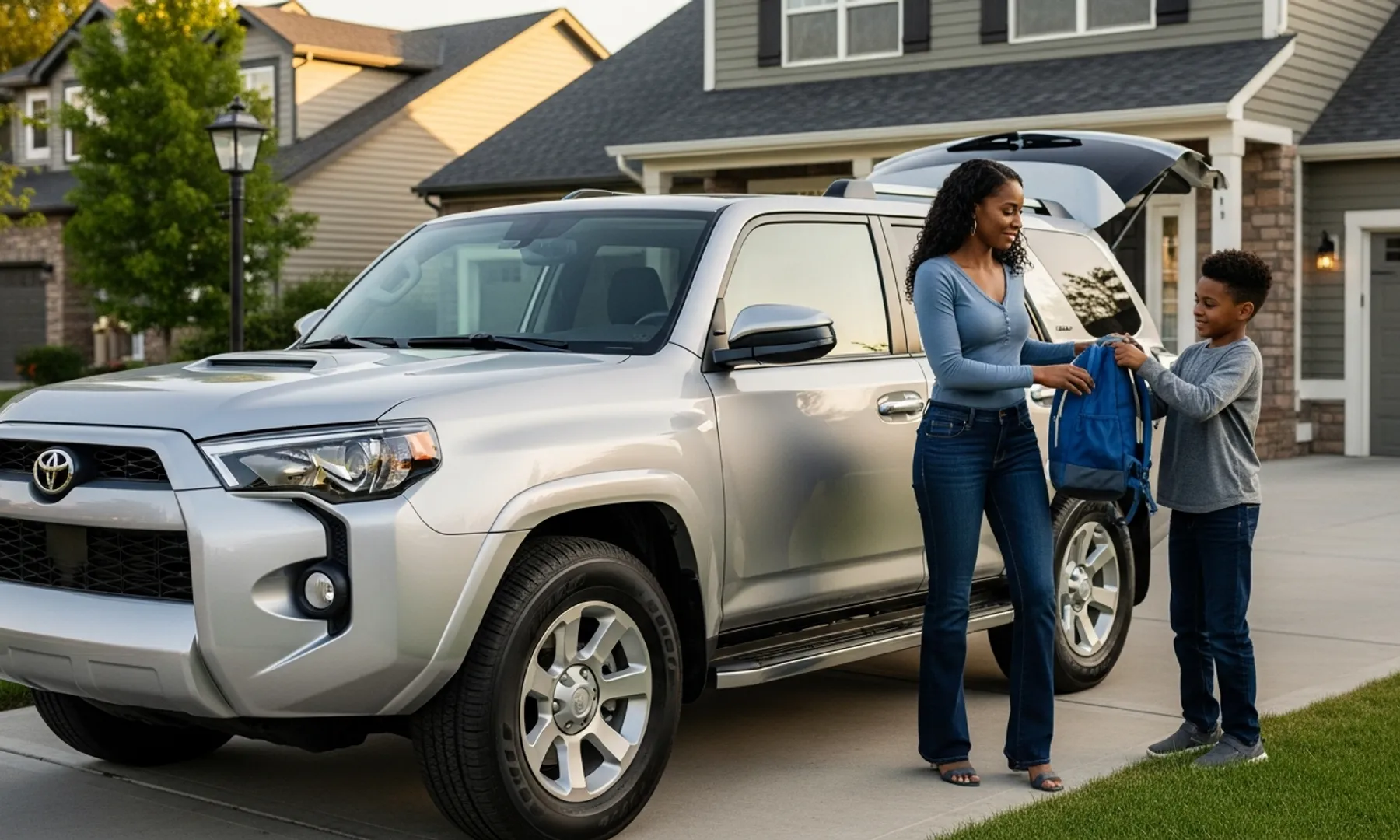
Toyota 4Runner Retains 66.9% of Its Value After 5 Years
The Toyota 4Runner tops the SUV resale value charts, retaining 66.9% of its original value after five years according to the latest iSeeCars study. This means a $40,000 4Runner purchased in 2021 is still worth approximately $26,760 today.
The study analyzed over 13 million used car transactions to determine which SUVs hold their value best. The 4Runner's combination of legendary reliability, off-road capability, and Toyota's reputation created a perfect storm for strong resale performance.
For comparison, the average SUV retains just 49.1% of its value after five years. The 4Runner's 17.8 percentage point advantage translates to thousands more in your pocket when it's time to sell or trade.
Top 10 SUVs with Highest Resale Value After 5 Years
| Rank | SUV Model | 5-Year Resale Value | Original MSRP Range |
|---|---|---|---|
| 1 | Toyota 4Runner | 66.9% | $38,520-$53,915 |
| 2 | Jeep Wrangler | 63.2% | $36,895-$48,895 |
| 3 | Tesla Model Y | 61.5% | $52,990-$69,190 |
| 4 | Toyota Highlander Hybrid | 58.7% | $40,620-$49,735 |
| 5 | Honda Pilot | 57.3% | $38,080-$51,020 |
| 6 | Subaru Outback | 56.8% | $28,395-$40,945 |
| 7 | Toyota RAV4 Hybrid | 56.2% | $30,725-$38,825 |
| 8 | Chevrolet Tahoe | 55.9% | $52,995-$72,795 |
| 9 | Ford Bronco | 55.4% | $36,040-$62,995 |
| 10 | Lexus GX 460 | 54.7% | $57,575-$69,175 |
The data reveals a clear pattern: body-on-frame SUVs and hybrid models dominate the top spots. Toyota claims four positions in the top 10, showcasing the brand's resale strength across multiple segments.
Why the 4Runner Holds Value Better Than Competitors
The 4Runner's resale dominance stems from several key factors that buyers prioritize in the used market.
Proven Reliability: Toyota's 4.0-liter V6 engine has powered the 4Runner since 2010 with minimal changes. This consistency means fewer unknowns for used car buyers and lower long-term maintenance costs.
Off-Road Capability: Unlike crossover SUVs, the 4Runner uses a truck-based platform with genuine four-wheel drive. Features like crawl control, locking differentials, and skid plates appeal to outdoor enthusiasts willing to pay premium prices.
Limited Annual Changes: Toyota updates the 4Runner sparingly, meaning a 2019 model looks nearly identical to a 2024. This stability prevents rapid depreciation from annual redesigns.
How 4Runner Resale Compares to Popular Crossover SUVs
Traditional crossover SUVs lose value faster than the 4Runner despite higher initial sales volumes.
| SUV Type | 5-Year Resale Value | Popular Models |
|---|---|---|
| Body-on-Frame SUVs | 60-67% | 4Runner, Wrangler, Tahoe |
| Hybrid SUVs | 55-59% | RAV4 Hybrid, Highlander Hybrid |
| Luxury Crossovers | 45-52% | BMW X3, Audi Q5, Mercedes GLE |
| Standard Crossovers | 40-48% | Honda CR-V, Nissan Rogue, Ford Escape |
The gap widens significantly when comparing the 4Runner to luxury European SUVs. A $55,000 BMW X3 might retain only $25,000 after five years, while a similarly-priced 4Runner TRD Pro holds closer to $37,000.
This difference matters most for buyers who plan to keep their SUV for 3-5 years before upgrading.
Regional Variations in 4Runner Resale Values
Geographic location significantly impacts 4Runner resale values across the United States.
Strongest Markets:
- Denver, Colorado: +8% above national average
- Salt Lake City, Utah: +6% above national average
- Seattle, Washington: +5% above national average
- Phoenix, Arizona: +4% above national average
Weakest Markets:
- Miami, Florida: -3% below national average
- New York City: -4% below national average
- Chicago, Illinois: -2% below national average
Mountain and Pacific Northwest states show the strongest demand, driven by outdoor recreation culture and terrain that favors the 4Runner's capabilities. Urban markets with limited off-road opportunities see softer resale values.
Best 4Runner Model Years for Resale Value
Not all 4Runner model years perform equally in the resale market.
2020-2024 Models: Retain 65-70% of value due to recent purchase dates and updated safety features like Toyota Safety Sense 2.0.
2014-2019 Models: Hold 55-65% of value. The 2014 refresh added modern infotainment and improved interior materials.
2010-2013 Models: Retain 45-55% of value. These represent the first years of the current generation but lack newer safety and tech features.
TRD Pro Models: Add 3-5% to resale values regardless of year due to exclusive off-road equipment and limited production numbers.
The 2020 model year marks a sweet spot, offering modern features without the steepest depreciation curve of brand-new vehicles.
What This Means for 4Runner Buyers and Sellers
Understanding the 4Runner's resale strength should influence your buying and selling strategy.
For New Buyers: The strong resale value justifies the 4Runner's higher MSRP compared to crossover SUVs. You'll pay $38,520-$53,915 upfront but recover more when trading in.
For Used Buyers: Expect to pay premium prices for low-mileage examples. A 3-year-old 4Runner with 36,000 miles might cost $32,000-$35,000, closer to new car pricing than typical used vehicles.
For Current Owners: Consider selling privately rather than trading in. The strong demand allows private sellers to capture more of the vehicle's retained value.
Timing Your Sale: Spring and summer months show higher demand as buyers prepare for outdoor activities. List your 4Runner between March and July for optimal pricing.
How to Maximize Your 4Runner's Resale Value
Several factors can boost your 4Runner's resale value beyond market averages.
Maintenance Records: Keep detailed service records showing oil changes every 5,000 miles and major maintenance at Toyota intervals. This documentation can add $1,000-$2,000 to resale value.
Original Equipment: Maintain factory wheels, running boards, and roof racks. Aftermarket modifications often reduce resale appeal to mainstream buyers.
Color Choices: Neutral colors like white, black, and silver retain value best. Bright colors like yellow or orange may limit buyer pool.
Mileage Management: Keep annual mileage under 12,000 miles if possible. High-mileage examples (over 80,000 miles) see accelerated depreciation.
Interior Condition: Address wear on leather seats and dashboard early. Interior damage disproportionately affects perceived value.
These steps can help your 4Runner exceed the 66.9% retention rate and potentially reach 70% or higher.