
Ford F-150 vs Chevy Silverado 2026: Towing, Tech, and Fuel Economy
The 2026 F-150 hybrid saves $525 annually in fuel costs versus Silverado's most efficient engine, but Chevy counters with a $490 lower crew cab starting price. Hidden towing differences could cost thousands in payload restrictions.
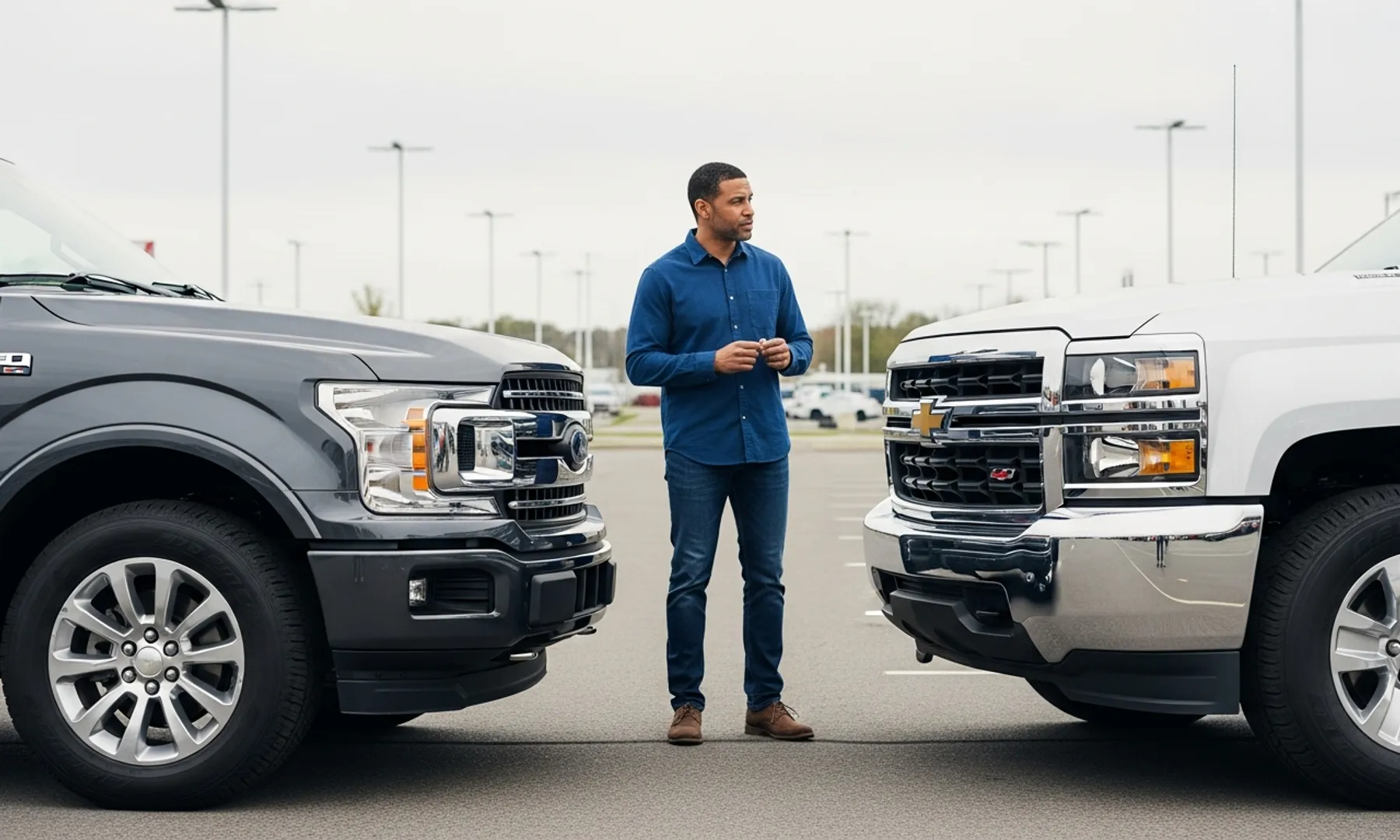
2026 F-150 vs Silverado: The Numbers That Matter
The 2026 Ford F-150 and Chevy Silverado 1500 are locked in the closest competition yet. Both trucks start around $37,500 for base models, but the real differences emerge in towing capacity, fuel efficiency, and technology packages.
Ford's 2026 F-150 offers maximum towing of 14,000 pounds with the 3.5L EcoBoost V6. The Silverado 1500 counters with 13,300 pounds using its 6.2L V8. For fuel economy, the F-150 hybrid achieves 25 mpg combined while the Silverado's 2.7L turbo delivers 23 mpg combined.
Both manufacturers redesigned their infotainment systems for 2026. Ford's SYNC 4A comes standard with a 12-inch touchscreen, while Chevy's updated Infotainment 3 Plus features a 13.4-inch display. The question becomes which truck delivers better real-world value for your specific needs.
Towing Capacity: F-150 Takes the Lead
The 2026 F-150 edges out the Silverado in maximum towing capacity. Ford's 3.5L EcoBoost V6 with 10-speed automatic transmission pulls 14,000 pounds when properly equipped. The PowerBoost hybrid version still manages 12,700 pounds.
Chevy's strongest towing setup combines the 6.2L V8 with the 10-speed automatic for 13,300 pounds. The 5.3L V8 handles 11,600 pounds, while the 2.7L turbo-four maxes out at 9,600 pounds.
Real-world impact: If you regularly haul a 28-foot travel trailer weighing 8,500 pounds loaded, both trucks handle it comfortably. But for larger fifth-wheel trailers approaching 12,000 pounds, the F-150's extra capacity provides a meaningful safety margin.
2026 Fuel Economy Comparison
Fuel efficiency separates these trucks more than raw power numbers. The F-150 PowerBoost hybrid leads with 25 mpg combined, followed by the 2.7L EcoBoost at 22 mpg combined.
Chevy's most efficient Silverado uses the 2.7L turbo-four for 23 mpg combined. The popular 5.3L V8 delivers 20 mpg combined, while the 6.2L V8 drops to 17 mpg combined.
Annual fuel costs (15,000 miles, $3.50/gallon):
- F-150 PowerBoost: $2,100
- Silverado 2.7L turbo: $2,283
- F-150 2.7L EcoBoost: $2,386
- Silverado 5.3L V8: $2,625
- Silverado 6.2L V8: $3,088
The hybrid F-150 saves $525 annually versus Chevy's most efficient engine and nearly $1,000 versus the 6.2L V8.
Technology and Infotainment Features
Both trucks received major tech upgrades for 2026. Ford's SYNC 4A system includes wireless Apple CarPlay and Android Auto, over-the-air updates, and cloud-based navigation. The 12-inch touchscreen responds quickly and includes physical volume and tuning knobs.
Chevy's Infotainment 3 Plus features a larger 13.4-inch touchscreen with wireless smartphone integration. The system includes Google built-in services and Amazon Alexa integration. However, Chevy eliminated most physical controls, requiring touchscreen interaction for climate and audio adjustments.
Driver assistance comparison:
- Ford Co-Pilot360 2.0 includes adaptive cruise control, lane centering, and automatic emergency braking as standard
- Chevy Safety Assist 2.0 offers similar features but charges extra for lane centering on base trims
Both systems support hands-free highway driving on mapped roads, though Ford's BlueCruise requires a $600 annual subscription after three years.
Pricing and Trim Level Breakdown
Base model pricing starts competitively for both trucks. The 2026 F-150 Regular Cab begins at $37,570, while the Silverado Work Truck starts at $37,500.
Most buyers choose crew cab configurations. The F-150 SuperCrew XLT costs $45,290, while the comparable Silverado LT Crew Cab runs $44,800. Both include the smaller engines (2.7L EcoBoost for Ford, 2.7L turbo for Chevy).
Popular upgrade costs:
- F-150 3.5L EcoBoost engine: +$1,995
- Silverado 5.3L V8 engine: +$1,395
- F-150 Lariat trim: $54,970
- Silverado LTZ trim: $53,600
Detailed Specifications Comparison
| Feature | 2026 Ford F-150 | 2026 Chevy Silverado |
|---|---|---|
| Base Price | $37,570 | $37,500 |
| Max Towing | 14,000 lbs | 13,300 lbs |
| Max Payload | 3,325 lbs | 2,280 lbs |
| Best MPG | 25 combined (hybrid) | 23 combined (2.7L) |
| Touchscreen | 12 inches | 13.4 inches |
| Bed Length | 5.5, 6.5, 8 ft | 5.75, 6.5, 8 ft |
| Warranty | 3yr/36k basic | 3yr/36k basic |
| Crew Cab Price | $45,290 (XLT) | $44,800 (LT) |
The F-150 offers three bed lengths including a short 5.5-foot option, while the Silverado's shortest bed measures 5.75 feet. This difference matters for garage clearance and urban parking.
Real-World Owner Experience
Current F-150 owners consistently praise the truck's towing stability and EcoBoost engine responsiveness. The PowerBoost hybrid appeals to contractors who use the onboard power outlets for tools and equipment. Ford's mobile service program handles routine maintenance at your location in many markets.
Silverado owners appreciate the truck's ride quality and interior space. The 13.4-inch touchscreen draws positive reviews, though some miss physical climate controls. Chevy's OnStar services include automatic crash response and stolen vehicle assistance.
Common complaints:
- F-150: Turbo lag in 2.7L EcoBoost, premium fuel requirement for 3.5L EcoBoost
- Silverado: Transmission hesitation in 2.7L turbo, road noise at highway speeds
Both trucks score well in J.D. Power reliability studies, with the F-150 slightly ahead in initial quality ratings.
Which Truck Should You Choose?
Choose the 2026 F-150 if you prioritize maximum towing capacity, fuel efficiency, or need onboard power generation. The PowerBoost hybrid makes sense for daily commuters who occasionally tow. Ford's three-year complimentary maintenance program adds value for new buyers.
Pick the Silverado if you prefer traditional V8 power, want the largest available touchscreen, or value Chevy's lower entry price for V8 engines. The Silverado also offers more interior storage cubbies and a slightly quieter cabin.
For heavy towing (over 10,000 lbs): F-150 with 3.5L EcoBoost
For fuel economy: F-150 PowerBoost hybrid
For value: Silverado with 5.3L V8
For technology: Either truck delivers competitive features
Test drive both trucks with your typical load before deciding. The differences in steering feel, ride quality, and seat comfort vary significantly between buyers.
Disclaimer
The information provided in this article is for general informational purposes only and should not be considered professional advice. While we strive to keep the content accurate and up to date, we make no guarantees of completeness or reliability. Readers should do their own research and consult a qualified professional before making any financial, medical, or purchasing decisions.